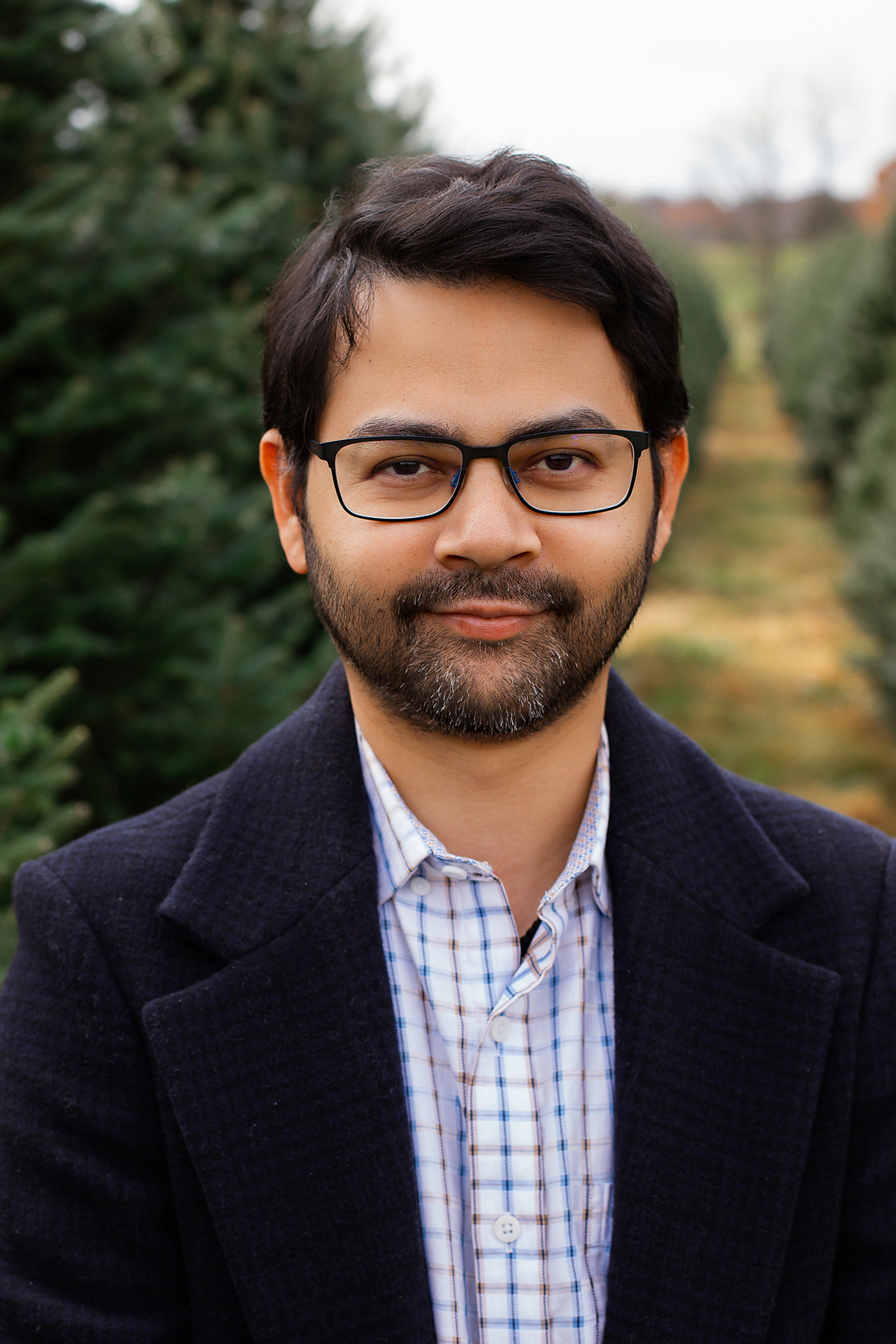
Conducted by James MacNee, Project Editor and Book Review Editor for the Journal of Contemplative Studies (JCS).
JCS: Could you give a brief synopsis of your article?
MF: Thank you for interviewing me about this. My latest article, published a few months ago in the Journal of Contemplative Studies, has, as you can see from the title (“Beyond Technical Fixes: Sufism, Contemplation, and Climate Change as Human Predicament”) three key elements: Sufism, climate change, and contemplation, or contemplative action. The goal is to bring these seemingly disparate elements together through an analysis in conversation with particular philosophers. In this case, I examine the writings of two scholars: Seyyed Hossein Nasr, who represents Sufi philosophy, and Hartmut Rosa, a well-known German sociologist who has written extensively on climate change as well as the theory of resonance.
My article shows how “ecological living” can contribute to addressing climate change. Ecological living involves a range of contemplative practices aimed at realizing a sense of oneness and interconnectedness. I argue that it is one thing to speak of interconnectedness at a theoretical level, but quite another to demonstrate, in practice, that it can be—and indeed is—achieved. I discuss Sufi practices, among others, to show that even within the context of modern life and its unique challenges, there remains a real possibility for transformation. I do think there is hope, provided we are motivated to move in the right direction.
JCS: Beautiful, yes. Could you say a little bit about what the practices are? And how are these practices able to do more than just engage the kind of abstract idea of oneness or interconnectedness—why can these go deeper than just talking about it?
It is one thing to speak of interconnectedness at a theoretical level, but quite another to demonstrate, in practice, that it can be—and indeed is—achieved.
MF: Yes, this is a very important point. It can be addressed on several different levels, and I’ve published a book and many articles on aspects of it, but I will try to be brief. It is simply the nature of our modern education and the contemporary human mind, especially in a Western context, that we tend to gravitate toward ideas. We want to play and work with ideas and with our imagination.
But if you look at the writings of philosophers, especially mystical philosophers across many traditions, they more often than not critique a purely theoretical understanding. In the Sufi context in particular, there is a well-known critique of merely theoretical philosophy. Sufis draw a distinction between purely theoretical knowledge and realized, practical, experiential knowledge. For example, they speak of honey: you can study all its chemical properties through various scientific disciplines, but that is very different from tasting it. Or take dance: you can read books about dance or study its history, but when you hear a dancer speak about the experience of harmony or performance, it becomes clear that to study and know it only as an idea is to remain an outsider in crucial ways.
So, with oneness and interconnectedness, if they remain merely ideas in our imagination, we are not truly experiencing ourselves as part of a greater whole. That is where contemplative practices and spiritual traditions become extremely important. For instance, silence is a very important practice in Sufism, as well as in other traditions. Part of the problem is that the mind is constantly thinking. That, in itself, is a problem. So one can already glean the value of contemplative practices.
In Sufism, there is a host of practices that ultimately lead one toward union, oneness, and interconnectedness—with the non-human world, with the source of existence, with everything. In my article, I discuss one of the most important practices: invocation or dhikr in Arabic. It is similar to Japa yoga: one constantly repeats a sacred formula or mantra, or a divine name, with the aim of bringing about self-realization. This invocation is always coupled with contemplative practices, so it involves both repetition and meditation.
There are different modalities and levels of invocation. As a beginner, one may practice with the tongue, focusing on the external meaning; but as one progresses on the spiritual path, the goal is to integrate deeper dimensions of one’s being at the most profound level. These practices are also accompanied by ethical disciplines—they may involve a particular diet, as well as other yogic and ethical practices. In this sense, it is a way of life, an orientation to the world. It is not just ten minutes of sitting quietly; while that may be a starting point, it is unlikely to lead to significant progress on its own.
In Sufism, there is a host of practices that ultimately lead one toward union, oneness, and interconnectedness—with the non-human world, with the source of existence, with everything.
JCS: Great, thank you. What is the impact of your article; how does it connect to the field?
MF: I’ve incorporated parts of the article into my forthcoming book, The Interconnected Universe: Sufism, Climate Change, and Ecological Living (University of Pittsburgh Press, 2027). I also publish my writings on various social media platforms, and on my website, where we can track engagement. The piece has been downloaded by hundreds of people. Of course, I also aim to make an academic contribution, but in this case the work is also meant for a broader public audience.
I do believe that we are living through, to put it mildly, very troubling times. There are many indicators that something is seriously wrong with how we are organizing key aspects of our society, namely economics, political economy, and technology, among others. My book seeks to frame these issues, critique prevailing approaches to addressing them, and offer an alternative. It will not do to treat everything simply as a scientific problem. It is not only about solving problems; it is also about orientation, i.e., how we understand our place in the universe, which necessarily involves ethics, as well as spiritual and philosophical commitments. Unless we come to recognize that something is fundamentally amiss in the dominant mode of thinking, we will remain confined to short-term responses. By failing to think in terms of ecological intelligence, we risk losing something essential. Part of the answer, I argue, lies in ecological living and a more spiritually oriented way of life. Even apart from climate change and environmental crises, this raises deeper questions about human flourishing: What is a good life? What makes life meaningful? In this sense, the book also aims to address an important gap in contemporary discussions of human flourishing.
JCS: That’s beautiful, yes. You mentioned a little bit about your forthcoming book; that figures into my next question. How does this article figure into the future of your work or the future of the field?
MF: In the book, I discuss the alternative worldview we should embrace if we are serious about what is happening. I cover a wide range of topics, but the book begins with the problem of geoengineering. As you know, billions of dollars are being spent, and research projects are underway at places like MIT, Harvard, and elsewhere. But if you look at the history of geoengineering and its moral and ethical implications, it is deeply problematic. I will not go into the technical details, but it often seems that policymakers—and even some academics involved in policy-level thinking—do not adequately address these concerns. There is a prevailing attitude that places far too much emphasis on, and confidence in, science and technology. I argue that part of the problem is epistemological; it is a crisis of values, but also a crisis of knowledge. There is a problematic tendency to understand the universe through materialism. Whether we are talking about economics or geoengineering, this perspective tends to dominate. But human beings are not biological machines.
By failing to think in terms of ecological intelligence, we risk losing something essential.
There are two or three chapters in which I explore the history and philosophy of science, and I engage theories of consciousness, including panpsychism and cosmopsychism. These discussions show that there is an opening even among those who are typically averse to metaphysics or to large-scale, “big ideas” thinking. In the end, I present a version of cosmopsychism grounded in Islamic philosophy and Sufism. I also include a substantial chapter on ecological economics, so the book is not only philosophical. Economic policies, especially what some have called the “growth fetish,” can be highly anthropocentric, leaving little room to account for nature or for the fact that certain realities, such as land and ecosystems, cannot be easily monetized. Unless a more holistic approach to the climate crisis is adopted, the prospects for a sustainable future remain limited. Overall, I argue that climate change forces us to reimagine “what it means to be modern” and how one should embrace “ecological living” in response to increasing environmental crises.
JCS: Awesome. Congratulations on the book project, and thank you.
MF: Thank you. It was wonderful talking with you.
“Beyond Technical Fixes: Sufism, Contemplation, and Climate Change as Human Predicament” is a part of Special Issue #03: Contemplative Ecology.