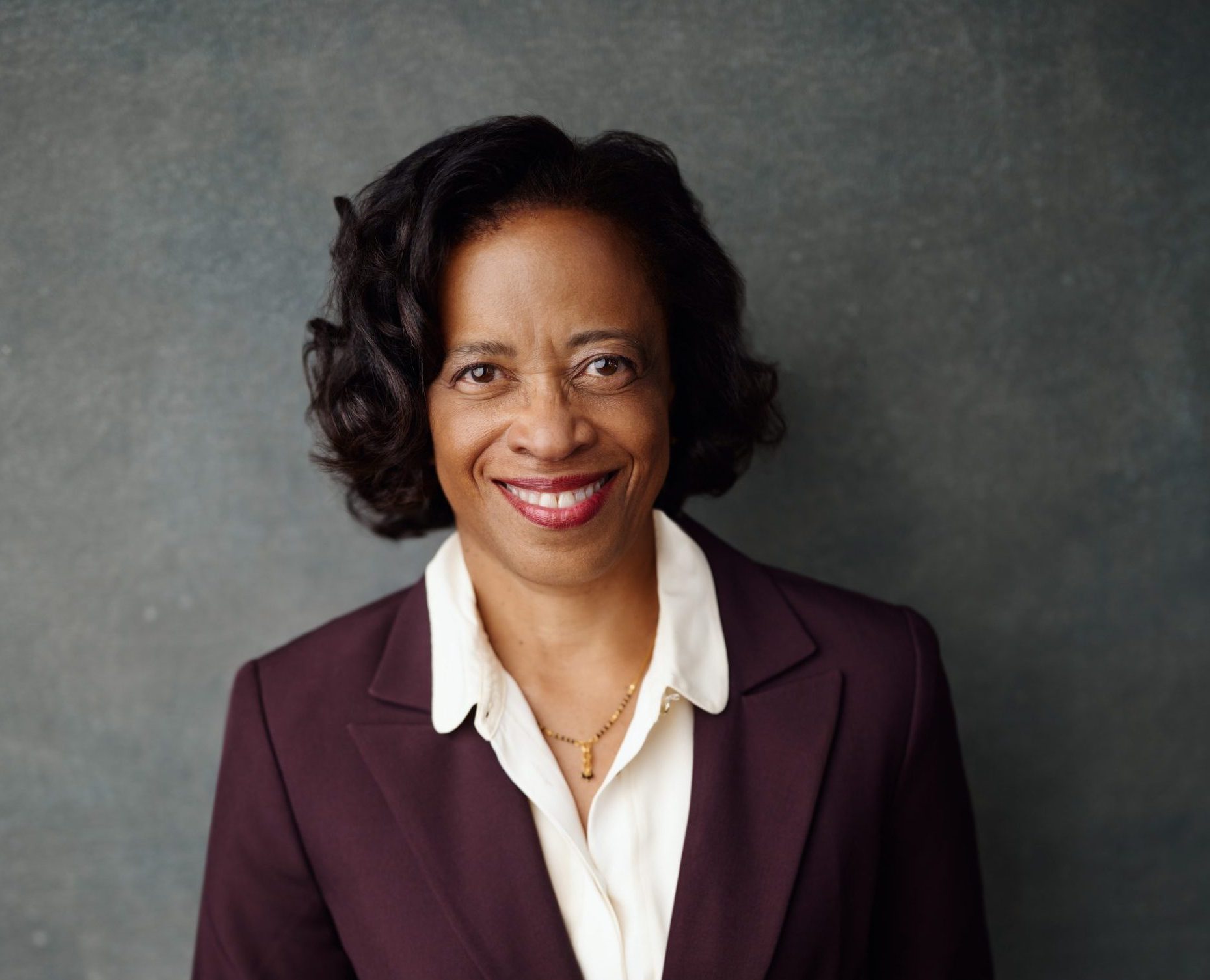
Conducted by Michael Overstreet, a doctoral candidate at the University of Virginia and a Research Assistant at the Journal of Contemplative Studies (JCS).
JCS: Thanks so much for taking the time to talk with me today, Rhonda. I’d first like to hear you describe what it is you do—what are you all about?
RM: What a good question. These days, I’m primarily a writer and convener of spaces for mindfulness practice, reflection, and community building. I am often writing various things—a chapter here, an essay there—and lately I am really trying to focus on a book project. Overall, though, I’ve really been about trying to bring contemplative approaches to how to live better together, into our public interactions—off of the cushion and into the world, so to speak—and a lot of that started with my work as a law professor at the University of San Francisco, where I taught for years. I’m professor Emeritus now, and I voluntarily took Emeritus status and left full time teaching sooner than folks thought I might so that I could focus on some other things like writing and convening these kinds of spaces which, after the pandemic, just seemed important to put into primary focus.
JCS: In preparation for our conversation, I read a little bit about your investment in socially engaged mindfulness, in bringing mindfulness into social places. I’m interested whether there is a particular tradition or denomination that led you to your practices of mindfulness and contemplation. Is there anything in your upbringing that steered you to where you are now?
RM: I came to mindfulness through what you could say is my own journey. I grew up in North Carolina and was raised in a home where the Christian contemplative tradition was strong. My grandmother had been called to the ministry. So, I grew up with folks who were prayer-based, who embodied this idea of living with integrity and living your practices, whether at work, church, or in the community. I was born in and around that, but I found myself drawn to approaches that focus a bit more on how to clarify the mind and be more actively engaged in a way of more clearly seeing how we become our own obstacles to a sense of freedom and ease. I was drawn to practices in more eastern contemplative traditions that allowed devoting myself to seeing the movement of my own mind. I started out doing my own reading at home. My boyfriend at the time, now husband—his family had immigrated from India, so he happened to have a copy of a book called The End of Sorrow: The Bhagavad Gita for Daily Living in our apartment.i And I just started reading it on my own and began to explore meditation.
There are practices that a Western mind can benefit from that really are about centering and clarifying and meditation-based practices. This book met me at the right time—I had just finished graduate school and law school, and had come out to California to study for the bar, and I needed something to help me center myself. This opened up a vein of curiosity about other ways of meditation and I found Buddhist practitioners of Zen at the San Francisco Zen Center, an aligned community here. Norman Fisher, the former abbot of the San Francisco Zen Center, was and still is convening a group for lawyers and law folk. And so I found myself in this gorgeous, meditating group, and eventually trained as a mindfulness-based stress reduction teacher with Jon Kabat-Zinn. I’ve been more interested in my own curiosity as a student of these teachings, and less about a particular tradition. It’s really been about trying to understand whether these practices might be integrated with those that I was brought up with in my Christian heritage—the heartful, soulful orientation toward bringing a spiritual vision into the world that would include everybody. I think my journey has been about wanting to bring those two together.
JCS: I’m curious whether the contemplative practices you started taking on began to influence the way you practiced law, or the way you understood justice. Did mindfulness come into your life while you were a practitioner of law or while you were a teacher?
RM: Yeah, I was a lawyer for just five years before I went into fulltime law teaching. I think the truer way of saying this is that I already had this view of what law might better become. Drawing on this long heritage of mine and my experience as a black woman born and raised in the South, I’d been trying to find a way—a language, a discipline, a way of being in the world—that would, in a certain sense, make real what seemed like the promises of liberal democracy in the post-civil rights era. In other words, I came into higher education and law with a certain kind of hope about what it could stand for, not one that I was necessarily seeing for myself in my higher ed or in my law practice or anywhere. I was on a mission to find a way to, I think, live more consistently with my dreams, and there was a way that mindfulness and the language of mindfulness—about compassion, clarity, and being open to other ways of being in the world—appealed to what my heart was looking to express. And so I started to bring more of that into law teaching. It was right around after I got tenure that I really started to give myself permission to bring these practices into my classrooms, in my writing, and into the world.
I could readily see how mindfulness might support our students in deepening their skillfulness as lawyers, in listening, thinking, writing, in helping people resolve immediate conflict.
JCS: Is the mindfulness in your teaching more of a theoretical mindset you brought to the classroom, or did it involve an actual practice?
RM: We practice with the support of this community of practitioners I mentioned—with Norman Fisher in the Meditating Warriors group. At a certain point, we were practicing once a month, meditating for a bit and then reflecting on bringing those practices into our work as lawyers and law professors. After a few years of this, Norman started encouraging that we bring these practices more forthrightly into our workplaces. He was inspiring us to go beyond just simply meditating and reflecting in our group, and actually begin figuring out a way to bring it into the work we were already doing. This was an inspiration for me to try and think about how to bring it into the classroom. I ended up going to the Dean of my Law School and finding out if there might be a possibility for me to offer a class bringing mindfulness and law together. I could readily see how mindfulness might support our students in deepening their skillfulness as lawyers, in listening, thinking, writing, in helping people resolve immediate conflict. I also saw it as a support for being more ethical. It was a way for expanding the base of knowledge, to include not just what we traditionally teach in law school, but to allow space for wisdom traditions to help shape how we react to a given conflict scenario.
My Dean was receptive to me immediately starting a course, and I found other professors who were interested. Myself, a fellow tenured professor of law who was also a former Jesuit priest, and a mindfulness practitioner whom I’d met through Norman who was an adjunct professor at our law school co-created a class called Contemplative Lawyering. It was a smaller seminar that would give lawyers-in-formation an introduction to meditation and how those practices might support them in deepening their skills as lawyers, and in reflecting on the values and the ethical mission of law.
So I was teaching this seminar, but also traditional courses—personal injury law, insurance law, immigration law. It was in the tort law class that I had first year students—and you get a certain unique kind of special bond with first year law students that I wouldn’ttrade for anything. This is a big lecture class of a hundred or so students. Eventually, they started to understand that I was also teaching a mindfulness and law class. So they sometimes would say, ‘Professor Magee, we just we had this horrible weekend of exams, can you please open our class with a meditation?’ And just like that, they started asking for contemplative support in the class.
And, in my writing, I was thinking about the more theoretical implications of this approach for what justice and jurisprudence might look like. This, though, was always more of a challenge at the law school where I didn’t have a whole lot of support for these projects. Not that I had much for the practical applications part of my work, but when it came to scholarship there was even less understanding. This is all just to say that it’s never been easy trying to change the way legal education is practiced. I did, though, have fun trying to do it. And if felt meaningful to me.
JCS: You just touched on this, but I’m interested in the stakes of bringing contemplation to the realm of law—are there political implications for bringing meditation into jurisprudence?
How do we make manifest the duty of care, not only in private law, but also in the public realm?
RM: So, jurisprudence is the philosophy of law. It’s how you would talk about trying to pursue justice in the system. When I went into law school, I had been a graduate student in sociology and had this personal background as a black woman from the South entering into this profession which was not created for people like me; it was traditionally an all-male profession. There’s a lot of this still going on today, injustice in our systems of justice. And so, questions of how we might improve both our intentions and aspirations in the process, procedures, and applications of law is what I think jurisprudence is about. I’ve always thought that there was something to be said for reforming the way we think about the subjects and objects of law. So often in the liberal legal tradition we have this notion of the atomized, rights-bearing individual. I found myself drawn, though, to those who were critiquing law for being about individuals. The individual subject of law is of course important, but there is a community dimension, too. There’s a collective dimension that we haven’t seemed to have figured out how to articulate. I think law might be improved if we rethought it from the perspective of a more collective consciousness, from a place of trying to heal the separation between the individual subject and the environment in which we find ourselves, whether that be our communities or what we call the planet Earth.
Meditation can help foster this sense of being part of a whole. It helps us feel the interconnectedness between ourselves and the air that we breathe, the planet we’re part of. I think this particular kind of consciousness could be very important concerning the duty we owe one another in tort law. How do we make manifest the duty of care, not only in private law, but also in the public realm? And as I alluded to a little bit, when we think about environmental law, how can we restructure ourselves to be in a better relationship with the planet? There are so many potential ways that the consciousness that can arise from meditation might support us in articulating a more just relationship between the so-called human subject and these different subjects and objects of law—human beings we see as other, the planet, animals, the non-human. We’re so embedded in the current way of thinking about the human as the center and object of the legal system and all rights flow from that. It has not been easy to transform that, but I do believe that law evolves out of consciousness. So you will never, I think, change law until you understand the relationship between the individual and the greater community, until you recognize the responsibilities each part owes to the whole. It’s a big project to reform law at that level.
JCS: To reform consciousness.
RM: Yes, I mean, it starts there—law is reasoning from consciousness. I’m inspired by one of my old professors from UVA’s law school, Ted White,ii a scholar whose body of work on jurisprudence and its implications has influenced me greatly. Where we get in terms of what we do with our law is always going to be limited to where we are in our culture and in our consciousness. You can see connections between these efforts to change legal culture, and the broader effort to help evolve culture and consciousness thatcontemplative science is so beautifully helping support in the world and through education.
This past December, I was fortunate enough to be called to Geneva, Switzerland, to the United Nations, where they were inaugurating the first room for meditation and contemplation at the Palace of Nations in Geneva. It was in preparing to participate in this opening, I learned that there was a similar space at the UN headquarters in New York. These spaces, though, owe their existence to a campaign in the contemplative sciences tradition that has evolved over the last years. The UN has embraced training in mindfulness for diplomats as a support, and to inaugurate this new program, I, John Kabat-Zinn, and a few others were invited over to the UN to sound the bell. That was December 2025 and, since then the world has been manifesting in many ways that show we urgently need this sort of program, we need some sort of change in consciousness to meet not only law, but conflict resolution and diplomacy on the world stage. I think we are slowly getting there, and feel hope that developments like the one I’ve just pointed to at the UN, and what you all are doing at UVA with the Contemplative Sciences Center will continue helping bring about these sorts of changes. I think we can probably all agree, no matter one’s political perspectives, that we’re at an all-hands-on-deck moment in the world today. I’m hopeful we will continue to advance the cause of seeing more clearly, discerning the root causes of our conflicts asa result.
JCS: This was all so beautiful, Rhonda. It’s immense—that you helped bring mindfulness to the world stage, that you helped inaugurate a space for contemplation in international relations and diplomacy. Coming from my own work in the environmental humanities, I admire so much that you are equally invested in expanding our understanding of the human, of what it means to be human.
RM: I’m right there with you. I mean, at this point, I feel like if it’s not an evolution towards eco-consciousness, I’m not sure it’s mindfulness at all. There’s a part of me that wonders whether we even need the “eco-” qualifier—mindfulness is about thinking from an expanded and porous self.
JCS: Thank you, Rhonda. I am honored to have been able to have this conversation with you.