Conducted by Ame Wren, a doctoral candidate at the University of Virginia and a Research Assistant at the Journal of Contemplative Studies (JCS).
JCS: Welcome. It’s great to have you here. I have three main core questions, but I was hoping you might start by giving us a brief little bio.
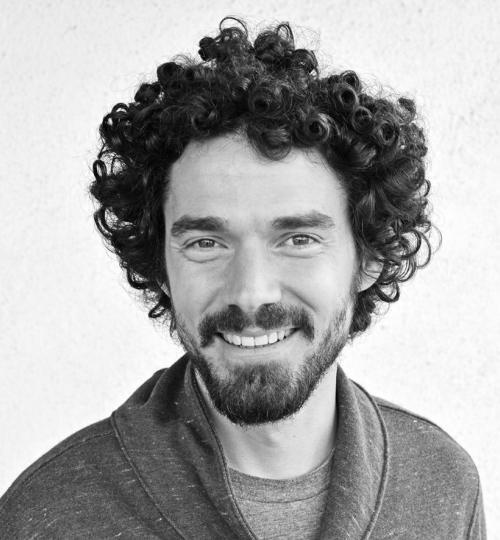
MS: I’d be happy to. My name is Mikey Siegel, and my background is in robotics and engineering. I did my graduate work in robotics at the MIT Media Lab a number of years ago, and was actually here in Charlottesville, Virginia after I finished grad school. The very first thing I did was go to a yoga ashram to learn how to meditate at Yogaville, which is an hour away from here—it’s a really special spot. This was my first introduction to meditation and to spiritual practice, and it really planted a seed. That’s been a central part of my life ever since, not just in the individual process of transformation, but in a collective relational process. So I’ve been trying to bridge these areas of engineering and contemplation for the last ten plus years in a lot of different ways. I’ve taught and designed classes around this at Stanford University, I started a global community called Consciousness Hacking which at one point had 50 chapters around the world, I’ve organized conferences, I’ve done all kinds of stuff. Most recently, I’ve been working on a technology that I developed, focused on human connection. We can take a group of people and connect them to sensors that measure the heart and breath and turn that into sound and light and music creating a multimedia, connective, meditative experience. I’m currently leading a research project looking at the impact of this technology at UC Santa Barbara.
JCS: Fascinating. My first question is sort of an elaboration on what you just said: How did your life path bring you to this intersection of contemplation and sense-making? It seems as though yoga played an important part.
MS: I’ve always really been interested in the intersection of mind and technology. If I look back, even in my childhood, I’ve always been fascinated with what’s beyond the ordinary. I’ve always had this sense that there’s something more than the normal reality we exist in, and that started at an early age. I always loved building and taking stuff apart. To bring it back to Charlottesville, my dad introduced me to this set of recordings from the Monroe Institute: It’s this place located near here that creates guided practices and meditations for having out-of-body experiences. I was never very successful with actually achieving any out-of-body experiences, but I got exposed to it through my dad. I don’t think it was successful for him either, but he was, like me, a sort of spiritual geek. He was interested in how we can create new, interesting approaches to having altered states of consciousness. This planted a seed for me, and I’ve been interested in it ever since.
How do you create universally accessible tools and technologies to shift collective human consciousness?
I do think there’s a deeper motivation that emerged after I finished grad school and had been exposed to meditation. I had thought that all of the problems in my life somehow existed outside of me, that my position as a human being was to solve these external problems. I saw how I was the origin, the center, the common variable in the whole equation of my reality. I saw that, by changing the nature of my mind, I could change my experience of reality and even reality itself, that I was the cause of my own suffering. I started to look around, and I realized all of the problems in the world were largely human-generated problems, that most of these problems could be solved through a kind of inside-out process of shifting humanity from a sense of disconnection and fear to one of connectedness, compassion, wisdom, and love. And so, I decided that the thing I really wanted to work on was the question: How do you create universally accessible tools and technologies to shift collective human consciousness?
JCS: I’m fascinated as to how you see this intersection of technology and contemplation as ultimately being a way to reduce suffering. Could you say a bit more about how your work with technology, personal practices, and your own experiences of contemplation have helped bring you to this sense-making?
MS: There is understandably fear and even resistance towards technology because people recognize that the technology landscape around us has a lot of unhealthy effects on us, young people especially. The point that I want to make is that these negative effects are not an inherent quality of technology, but rather a function of how they are designed. It’s like being exposed to fast food and processed food and seeing how unhealthy it is, and then coming to the conclusion that food is bad for you. Of course, that would be silly—we need food to survive. In the same way, technology is just a way of shaping nature to get our needs met. You can’t take that away, it’t part of what it means to be human. Modern tech is now the single biggest force shaping human consciousness. It mediates almost every aspect of our lives. We’re in these screens. We’re seeing through them. They’re influencing us. We now ask our questions to AI, searching Google, Google Maps, it’s constant. If we don’t figure out a way for this technological influence to be deeply nourishing and beneficial, perhaps even awakening and healing, then we’re really screwed as a humanity. This isn’t something coming from a place of “Oh, wouldn’t it be novel and interesting to have a meditation technology?” It’s much deeper than that, it’s an imperative for the flourishing of humanity. We have to figure this out. And so that’s been my focus—how do we do that?
The point that I want to make is that these negative effects are not an inherent quality of technology, but rather a function of how they are designed.
JCS: It’t a really interesting point. I feel like so much of the contemplative space has been pushing technology away, as though contemplation can only happen outside or in spite of it. This last question is future forward: How do you see your work continuing to move into spaces and places at these intersections?
MS: I just got back from three weeks in Bhutan. I was opening what we call the Dharma design lab at a monastery, a very traditional monastery deep in the heart of Bhutan. The monastery is run by Khedrup Rinpoche who is deeply steeped in a traditional Buddhist lineage, but is very forward thinking and open to innovation. He’s interested in how ancient and modern can come together to ensure that Buddhism, the Dharma, and the deeper teachings that Buddhism enables are accessible in our modern world.
The Dharma Design Lab is a technology, media and creativity school that teaches computers, filmmaking, audio production, generative AI, etc. All of this is physically set up in this monastery and includes a whole school that includes mentorship from Western creative technologists, from Bhutanese AI specialists and programmers, artists and more. And it’s not just about teaching these monks some tech skills. It’s about creating a new channel of expression for the monks and for the monastery in service to Buddhism and in service to the Dharma in the world. One way of contextualizing this is that central to Buddhism has always been art, architecture, and other ways of creating form in service to Buddhism, whether it’s sculpture or thangka or temples. And so, this is just another way to do that in our modern world that could potentially impact millions and millions of people.
Modern tech is now the single biggest force shaping human consciousness.
So to think even further into the future, this becomes a kind of a model. It’s not just a narrow model for bringing new forms of expression into a traditional monastery. I think it’s a model for something more broadly important. Although I’m not a parent, just an uncle five times over, I know every parent is thinking about technology and its influence on their children, how it relates to education. Technology has obviously been changing the landscape of education, but at the same time, it also has these almost drug-like impacts on young developing minds. My hope is that we’re developing new models of relating to education and to technology in a beneficial way. It’s not about just throwing tech in. There’s a lot of structure, rules, and culture involved. There’s a lot that we’re implementing at this monastery to help us understand how technology can serve human and collective well-being, to understand how it can become a model for education that integrates technology in a healthy, beneficial way.