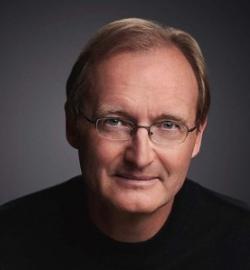
JCS: Welcome—I’m excited to talk with you today. I have three core questions, but first I’d love it if you could give us a brief bio and a background of who you are and where you’re coming from.
AH: I come from Boulder, Colorado and have an academic background. I got a double degree in classical music—piano performance—and biology. I then studied physics and later got a doctorate in dental oral surgery. I’ve also had a pretty contemplative background. I’ve been meditating for 50 years and am a devoted student to Tibetan Buddhism and did a three-year retreat. Now, though, I consider myself more curious than a Buddhist, and I just go wherever I can find truth and reality. I’m currently on staff at the Institute for Advanced Consciousness Studies as a resident and contemplative scholar, am a research consultant at Northwestern University in Ken Peller’s neuroscience lab, and am fulfilling my second aspiration to be a cognitive oral scientist in disguise—that’s my current passion.
JCS: Fantastic. Thank you. My first question is a continuation of your bio in that I’m interested to know how your life path brought you to this intersection of contemplation and sense-making.
AH: Boy, that’s a labyrinthian kind of question. I think it’s just a natural consequence of my life journey of understanding the relationship between contemplative practice and the way we co-create our respective realities. I think one of the great gifts of the meditative arts, especially with the practice I’m focusing on now, dark immersion or retreat, is this wonderful opportunity to see reality de- and reconstruct. It’s a longer version of what happens in sleep and dream yoga, which I’m also deeply involved with. They’re all connected in that regard. So, I’m very interested in sense-making and sense-breaking, in how we make literal metaphorical sense of our world. The capacity to work with that on a first-person basis and then also combine that experience with neuroscience and philosophy as a support allows, I think, for a somewhat rigorous first- and third-person look at the way we bring forth our world through our senses.
JCS: Your speaking of how we make sense of the world actually approaches what I’d like to ask with my second question. How does your work, your personal practices, your own experience of contemplation, and engagement with technology affect the way you make sense of the world?
AH: Well, I’d say it’s a bit more a question of my contemplative practice than of technology. To circle back around, these practices allow you to immerse yourself in environments where you can see a removed first person when the mind slows down. There you can see how it is that we bring forth this reality moment to moment. So, first and foremost, my contemplative practices have been key to that. In terms of technology, does that include psychedelics? If you’re looking at that kind of psycho-spiritual technology, then psychedelics have probably been the most powerful buttressing of my more traditional contemplative approaches. I’m not interested in recreational mind altering substances whatsoever, but several years ago, I began a somewhat concerted systematic exploration of some of the world’s most potent psychedelics over a two plus year period. It was a wonderful way to see how these entheogen psychedelics related to my contemplative practice. A lot of it went as I somewhat expected; they delivered me to several, similar dimensions. For instance, 5-AMEO-DMT is a very, very potent psychedelic; within just 10 seconds or so of your consumption of it your entire dualistic reality can be decimated. My experience with that particular agent was actually in the context of a dark retreat. So I was in for a week and came out just enough to function. I drove 10 minutes down the road, did a high dose 5-AMEO experience, and it basically delivered me to the same space I’d just spent six days in. I said, well, that’s super interesting. I didn’t really need to spend $600 to have this experience. But it was super interesting because, of course, this so-called collaboration reinforces the more organic way, you could say, of actualizing and revealing these states versus some of the more technological, or supplemental, approaches to augmenting one’s reality. Some experiences with virtual reality—like lucid dreaming and dream yoga—are a marvelous arena to really explore how we make sense of our world in a dream, which can be just as real or more so than the so-called waking state even though there’s no sense faculties on hand. These have been wonderful technological supports to my practices with sleep and dream yoga.
I think one of the great gifts of the meditative arts, especially with the practice I’m focusing on now, dark immersion or retreat, is this wonderful opportunity to see reality de- and reconstruct.
JCS: And so, our last question is forward-looking. I’m interested to know how your work at this intersection may, in the future, affect individuals, communities, and the world on a larger scale.
AH: This is a super provocative question because right now I’m working with several different teams of scientists in the dream yoga department, but more exciting for me is my studies of dark immersion, or dark retreat. Part of what we’re exploring are ways to make this ancient psycho-spiritual technology scalable, how to bring it to the general public. This requires a fair amount of cultural translation because the traditional approaches are much too challenging for most people. They present a very steep path. Working with gray immersions, weaving in and out, giving people instructions, guidance, parameters for coming to the limits, and not going past those limits. I think this all holds a lot of potential, especially with the coming wave of AI. For instance, the second book I’m writing on this topic is going to have at least a chapter, maybe more, on the human reclamation project. There are a number of things that darkness invites—interiority, depth, authenticity—that artificial intelligence can’t approximate. We confuse intelligence for consciousness, information for experience, knowledge for wisdom. AI can exhibit the former of these things, but at least, so far, there doesn’t seem to be a level of interiority, consciousness, subjectivity, and a world within artificial intelligence. So, dark immersion ends up being a wonderful counterbalance, a set of approaches to not get further blinded by the light, which, in this case, is the brilliance of the AI revolution. So, yes, I think there’s a lot of potential. I’m super excited about what the future holds. I think people are longing for this type of connectivity. As I was mentioning in my presentation, I think one can make a solid case that the current metacrisis or polycrisis is due to there being one distraction upon the next, one forgetting after another, one dismemberment after another.
There are a number of things that darkness invites—interiority, depth, authenticity—that artificial intelligence can’t approximate.
The great gift of darkness is that it helps one remember. If you simply stop distracting yourself, stop fracturing, stop dismembering through the simple process of enforced negation and cessation, the healing, restoration, and curative aspects of this spiritual technology can come to bear. I’m very excited about what this art of doing nothing in the unique environment of darkness can bring to those seeking interiority, connectivity.
JCS: That was fantastic, thank you so much for your time.