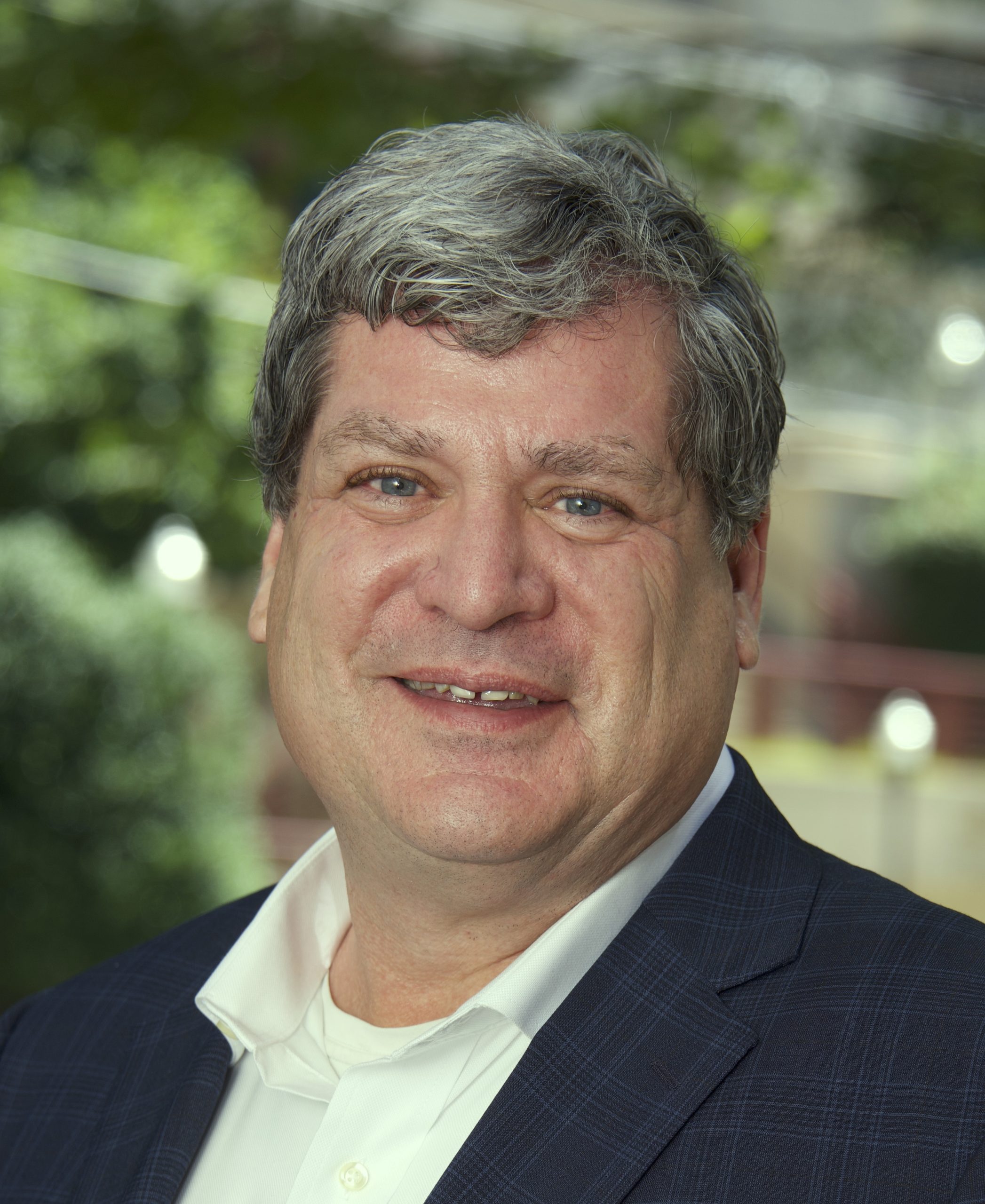
JCS: Welcome! Can you tell me a bit about your background in contemplation and education?
RR: I’m trained as a PhD in Developmental Science and Education, and I also hold master’s degrees in clinical social work and religion. My research interest centers on schools—including primary, secondary, and post-secondary educational environments—as a central cultural context of human development. Educational contexts, much like homes or peer groups, affect development broadly. Specifically, schools shape young people’s development beyond their learning of the 3R’s, reading, writing, and arithmetic. They also shape how young people see the world and themselves in the world—their worldviews and identities, values and ethical dispositions, and social-emotional skills and well-being. I’m interested in how we can understand these self-formational, social-emotional, and ethical impacts of schooling, and harness them to promote flourishing in educational institutions.
In 1991, I quit grad school to study with Matthew Fox, who at the time was a renegade theologian and Catholic. Fox had created the Institute in Culture and Creation Spirituality at Holy Names College in Oakland, California, and I went there to study. He was interested in catalyzing cultural renewal through new forms of education. He brought together scientists, contemplative practitioners, artists, poets, dancers—all manner of people interested in understanding the nature of mind and life—to try to create a new way of educating the whole person. Central to Matt Fox’s view of education was a holistic principle: Education needed to include attending to the body, heart, and mind. Furthermore, Fox was interested in using contemplative practices that were social and enacted, such as rituals and art-as-meditation, and not just introverted and private forms like silent sitting meditation. And he was particularly interested in art as meditation because he believed that imagination and creativity were the catalysts for cultural renewal.
This year in Oakland was very important in my life, because it offered me a model for the kind of education I wanted to experience, research, and bring into the world. I found inspiration to finish my graduate studies and went back to the University of Michigan to do so. Once back I began to explore: How could we create a more holistic education that meets young people’s developmental needs and sets them on a path of curiosity, awe, wonder, service, and flourishing? This was a big turning point in my life. I felt a yearning for something new, as I felt an absence of an education that attended to the head, the hand, and the heart. And I sensed in some way that our culture needed a new form of education if it were to survive in an increasingly materialistic age.
How could we create a more holistic education that meets young people’s developmental needs and sets them on a path of curiosity, awe, wonder, service, and flourishing?
JCS: Could you tell me more about your experience of being a student in that instance?
RR: It was mind blowing. First, I had never heard of meditation. Learning about meditation that year opened my eyes to the possibility of having a precious human birth—and what that meant, and how education could draw forth aspects of our being that I had not even known existed. Additionally, this year opened up my artistic side, and that was very refreshing. And the form of education that was offered, a holistic one, was full of kindness, care, and social connection. There was also attention to social justice and compassion as key aims of education. So, there was a kind of humanism in education that I had never really experienced. The was also ecumenism, different religious traditions were presented; and a kind of epistemic pluralism, where different ways of knowing—artistic, scientific, contemplative, activist—were all accepted and celebrated as different modalities of what it means to be fully human. I guess I could say that the institute that Matthew Fox created just felt like home. I heard a Swami once say that the experience of enlightenment is like coming home. No one needs to tell you why home is good. Everyone knows. And my year in Oakland felt a little bit like that.
JCS: That’s so beautiful. When you went back to graduate school, and then in your immediate years after graduate school, did you know that you wanted to do this work in higher education right away? Or did you ever work with younger populations as well?
RR: I finished grad school and I got jobs at Stanford University, then Portland State, and then Penn State. Slowly, over time, I experimented with and began to bring these holistic education approaches into my course with early adults, and that became my focus and where the work really took root. However, as the fields of Contemplative Science and Contemplative Education began to develop in the early 2000s, we all began to recognize that if we could teach contemplative skills and adopt holistic educational approaches earlier and earlier in a child’s development—teach them skills such as focused attention, empathy and social awareness, perspective, taking compassion, resilience, gratitude, kindness—the whole bouquet of human virtues: If we could teach them earlier, then maybe we wouldn’t have to undo bad habits and the suffering that so many of us learn our ways into—an unfocused and wandering mind, self-centeredness, ingratitude, and so on. We wouldn’t have to unlearn them and then relearn them if we just introduced an education that cultivated virtuous habits all along the life-course from the beginning.
So to answer your question, I didn’t know what I would do after I left Oakland. I had to make a decision. Do I give up on the old and decaying institutions of our culture that weren’t really working and go a new way? Or do I go back to the old barn and try to renovate it and paint it from inside? And that was my choice. I went back to the traditional institutions and tried to bring this work in as innovation. It was a bit tricky, however, as at that time there was really no acceptance of being a meditator who also did science or educational practice.
JCS: This is all so interesting to me. You mentioned how it was difficult at first, that you kind of were underground because you weren’t sure if it would be accepted. So I’m interested in: What’s at stake? And have you experienced backlash or resistance? Especially in today’s culture, there’s some tension here around contemplative practices in public institutions. I’d love to hear anything you have to say about that.
RR: Yes—when I quit graduate school and went to California, I became very interested in the spiritual path. I developed an exceedingly strong interest in knowing: Who am I? So this was a motivation. Another motivation was suffering. I think the instructive value of suffering for human development is grossly underappreciated. Nothing good ever comes out without a little suffering, said Desmond Tutu, and he uses childbirth as a prototypic example. It’s also true of difficult childhood. But I met a spiritual teacher, and I began attending an ashram. And I fell deeply in love with this path. “Oh, my God! There’s actually a set of teachings to address the life experience of suffering that I’ve had? Wow! I want to explore that, no matter what happens.” So there was the intrinsic motivation to not suffer, and to be happy. And I think initially, that motivation was stronger than any perceived costs of taking this road less taken. A teacher at Matthew Fox’s institute told us that that price of knowing oneself and diving deeply into love and spirituality was always the same—potentially everything you had. So that gave me courage.
I set off on what I thought would be a traditional career with my spiritual life a bit hidden. I took my first job in the academy at Stanford University where I largely hid my interests in spirituality. I taught it to students in courses, but was very quiet about it because I thought it would not be seen favorably. In the end, I didn’t get tenure at Stanford anyways and I went to India to study what I wanted to. On the day I didn’t get tenure I heard my spiritual teacher’s voice inside me: “In this life, be grateful for what you receive and do not receive.” And I think getting kicked out of Stanford was really a blessing. It allowed me to go study how a holistic education that included contemplative practice could work with adolescents and young adults. I received a Fulbright right around the time I didn’t receive tenure, and off to India, a liberated soul, I went!
During my time studying in India, I remember asking a headmaster of a school, a Swami: Why are you teaching adolescents meditation in this particular school? He began waving his hands over his heart and he said, “Our job, Robert, is to help young people discover who they are.” I realized that I had always thought of discovery as finding something new. But what the Swami was saying, actually, was that discovery is taking the covers off of something that is hidden but is already there. This reminded me of my own quest to understand who I am—the very life task that is at the heart of adolescent and early adulthood development. And I thought, Oh! Wouldn’t it be great if each person could see themselves as akin to a vast blue sky, or the light of 10,000 suns that doesn’t burn, or as a many faceted precious jewel? Wouldn’t the world be almost a paradise if people understood their inherent worth and dignity, and didn’t go chasing around trying to find or prove it through all sorts of other, maybe less appropriate or less fulfilling, means that make this world less than a paradise?
That mission, that purpose, to create educational institutions that helped young people dis-cover that and with it, to experience a life of meaning and purpose and service, solidified in India and became the North Star of my life. When I returned home, I didn’t know where all this would lead. And then, on cue, I met people associated with the Mind & Life Institute in 2005, and that changed my whole life. I realized these people were already pursuing what I wanted to pursue.
…that price of knowing oneself and diving deeply into love and spirituality was always the same—potentially everything you had.
JCS:Thank you for sharing. That’s a really beautiful story. I’m interested to know how you would define or begin to define contemplation. And then, do you have any specific instances that you could share about contemplation in the classroom?
RR: Arthur Zajonc, a retired physicist and the second head of the Mind & Life Institute, defined contemplation as contemplatio, a Latin word which he defined as “marking out a space for extended observation.” His is a definitionthat links the activity of the monastic or the meditator with that of the theoretician or the scientist. In both cases, the aim is to understand the nature of the world outside of us, and to understand the nature of this embodied mind that we’ve incarnated into, or are. To understand the true nature of mind and life, to answer the question “Who am I?” really requires extended observation.
So for me, contemplation is familiarization through extended observation of how this embodied mind works, how I make sense in a mind moment or in a lifetime, or across many lifetimes. During the pandemic I had a chance to teach a course with Mingyur Rinpoche called Human Development—From Birth through Rebirth. Rinpoche really taught me how Buddhism and human development should get together and talk to each other. So I began to think about not just contemplation in education, but contemplation, education and human development as a novel and new way—at the intersection of Buddhist thought and modern education and science—to educate the whole person. How do we set aside time in school curricula for extended periods of observation, of our breath, of nature, of our growing minds and changing relationships with parents and peers, so we can flourish? What is the developmental significance of learning how to pay attention, learning how to care through our attention, learning how to gain insight through our attention? How can education help us to mark out space for observation, and draw forth these birthright gifts for mindful awareness, creativity, love, kindness, compassion?
And then the human development piece adds: How do we do that in a way that’s engaging, relevant, and exciting for young people at different stages of development? What a three-year-old needs, for example, are gentle questions to foster their natural curiosity—something that they have in heaps. That’s just part of them. For college students, the approach is different. We thought long and hard about what college students are focused on, and of course it’s their identities (Who am I?) and love (With whom do I belong?). And so how can we teach contemplative education in a way that is developmentally engaging and appropriate—–in a way that speaks directly to the development needs of young people at different ages? So, for instance, I taught a college class on the art and science of care and compassion, and I basically talked about: What is love? What does it mean to love? What does it mean to receive love? What does it mean to be a loving and forgiving person with your partner, your friends, your parents? And what relevance might this have for writing a personal ad for the kind of person that you want to meet? The other thing that college students struggle with around their identity is this feeling of inadequacy, of unworthiness, of not being enough. How can we bring some sort of contemplative practice to bear on this situation? How can we learn self-compassion and include ourselves within our own sphere of empathic concern?
JCS: How do you see the intersection of contemplation and education evolving in the future?
RR: That’s a great question. We just had the Mind & Life Summer Research Institute on this topic. It was called Reimagining Contemplative Education: Shaping a Collective Future. In our design of that week-long program we instantiated what we saw as the growth areas for reimagining contemplative education going forward. First, we really thought that the modality of teaching contemplation to children of different ages could benefit from much more inclusion of the arts. Every artist knows that what they do is contemplative. But the world today has lost some sense of the deep quality of things, such that we don’t even understand that the arts are the oldest forms of contemplation. So we wanted to resurrect the old ways, singing, dancing, painting, coloring, working with clay—all of the rich, exciting, joy-producing activities that we loved as children and were intrinsically motivated to do—how can we incorporate art-as-meditation more? We also focused on reclaiming the body and the senses as a key way of knowing. You know, people don’t always realize that before they have a verbal thought, they had a non-verbal sensory-affective way of knowing others and the world. How can we reconnect with that somatic way of knowing and feeling? This is so important because even as adults, it is the primary way of knowing reality non-consciously through our senses and feelings that often drives our behavior and decisions. We believe it’s reason that guides us, but it’s really our emotions, and we should be aware of and utilize them more.
The point about incorporating more ideas about human development into our studies of contemplation is also key. You know, we have all of this cool stuff going on in colleges and universities, and it’s very rich in terms of philosophy. We also have all of this cool science going on in primary and secondary schools around contemplation. What if we started to string all of this work together in developmentally appropriate ways to provide a lifespan view of contemplation? So there are very rich ideas about development to draw on from both the contemplative traditions and science—and I believe we should build a new field of science and practice called Developmental Contemplative Science. We are pursuing this at the Compassion Center at Emory, and we hope our colleagues at UVA and beyond will be a key part of this effort!
Another key element is to include young monks and nuns who are studying in the Emory-Tibet Science Initiative, an effort to teach science in monastic settings in order to create individuals with multiple ways of knowing reality (scientific, contemplative, philosophic).In our time, contemplation is coming from the East, so to speak, into Western educational institutions, and science is going from the West, so to speak, into Eastern monastic institutions. We need a world where science and spirituality are partners in saving the earth and saving ourselves.
So how can we learn from the fact that science is being taught in monasteries to monks and nuns now, and contemplation is being taught to lay people in schools? This is a two-way exchange and what the 14th Dalai Lama calls the 100-year project. What can we learn culturally about this and how can we turn this quest into a worldwide approach to education? Right now, organizations like UNESCO, the Organization for Economic Development and Cooperation (OECD), and others have come to realize that the attentional, social, and emotional skills that we’re talking about are the skills that young people need for the future—the future of work, the future of their own well-being, the future of the planet. So this movement—whatever we want to call it, social-emotional learning, holistic education, contemplative education-—it seems to be, even as the world falls apart and goes crazy, it seems to be going global. So how can we talk more across cultures? That’s where I think we want to build out the field in the future—everywhere on earth.
JCS: That’s really exciting. Thank you, Rob, I really appreciate all of your time today. I learned so much from you.
RR: Thank you for this golden opportunity to share and dialogue with you!